Somewhere in the last few years, "I'm so busy" stopped impressing anyone.
It used to be the one boast you could make without blushing — a humblebrag dressed as an apology, proof you were wanted and booked. Say it now and you get a beat of polite sympathy. The person everyone quietly envies is the other one — rested, unhurried, unbothered. The one with the audacity to look free.
That flip is not a mood. There is status research underneath it, a hundred years of history behind it, and a very Singaporean twist at the end — because the thing that makes rest so hard here is exactly what makes it read as status.
Busy was the badge
The research first. Status used to be about what you owned; somewhere in the smartphone decade, it became about how little time you had.
Researchers at Columbia, Georgetown and Harvard measured it in 2017: people who signalled busyness — the packed calendar, the groceries ordered because no hour was left to shop — were read as more competent, more ambitious, more in demand. A busy and overworked lifestyle, the authors concluded, had become an aspirational status symbol [1].
Singapore never needed convincing. We rank fourth among the world's most overworked cities [2], and 61 per cent of workers here report burnout [3]. Busy wasn't just a badge in this country. It was a personality — and for a long time, the only acceptable one.
The original flex was doing nothing
It wasn't always like this. The busy badge is barely a century old — and the one before it was its exact opposite.
When the economist Thorstein Veblen set out in 1899 to explain how the rich displayed their standing, his answer was leisure. "A life of leisure," he wrote, "is the readiest and most conclusive evidence of pecuniary strength." Conspicuous abstention from labour was the mark of achievement; visible effort was what wealth existed to escape [4].
Then the industrial century flipped it. Work became identity, hours became worth, and busyness took the throne leisure had held for most of recorded history.
So the new flex isn't new. It's the oldest one on record, circling back.
A signal only works while it's scarce
Why would it circle back now? Because status signals obey one law: they die of popularity.
Luxury learned this first. When logo bags became something anyone could tap a card for, the wealthy went quiet — unbranded cashmere, unlisted labels. Researchers called it inconspicuous consumption, and noted it rising "even in Asia," where the loud logo had always ruled [5]. Quiet luxury was never modesty; it was status migrating to where the crowd couldn't follow.
Now run the same law on time. In a city where six in ten workers are burnt out, "swamped" is the least exclusive claim you can make. Everyone in the carriage is busy.
An unhurried person, though — in this town, that is genuinely scarce. And scarcity is the whole engine of status.
You can watch the repricing happen
If scarcity is the engine, you should be able to see the market move. You can.
Randstad has surveyed the world's workers for 22 years. Last year, for the first time, work-life balance overtook pay as the top motivator — 83 per cent to 82 [6]. In Singapore, it has been the number-one thing talent wants from an employer for three years running, ahead of salary [7].
The signs were there earlier. The New York Times declared sleep "the new status symbol" back in 2017 [8] — and sleep is simply rest, wearing its pyjamas.
And yet the old wiring holds: 62 per cent of Singapore workers still feel deprived of time off [9]. We have started to want the new flex. We still don't quite know how to take it.
The most disciplined man on the beach
I know that gap from the inside.
For years I treated rest as something other people needed. I wake at 5:00 and check in at the gym by 5:15, every day, weekends included; my friends call it the 5:15 Club. Then came a beach day with those same friends — and I was the only man there who kept his shirt on.
Me. The one who trained hardest of everyone present. The question that followed me home was asked kindly, which made it worse: you train so hard — why do you still look puffy?
The answer turned out to be cortisol — the stress hormone that keeps a switched-on body alert and tells it to hold on to everything. Kept high for long enough, it quietly works against you: the water retention, the stubborn weight, the sleep that stops restoring [10]. I've told the full story in the first essay of this journal; the short version fits in one line. You can't out-train a switched-on nervous system.
Which is why unbothered reads as status in a way a watch never will. It can't be bought, and it can't be faked. Calm like that is downstream of actual practice — and the body keeps the receipts either way.
The one skill school never graded
Practice, though, is exactly where Singapore struggles — and not for lack of discipline.
We were wired, carefully and expensively, to do everything for something. The grades were for the next school, the run is for the marathon, the hobby is for the CV. Singapore's education system builds world-class switchers-on, and the residue shows in the data: 72 per cent of our students say that when they fail, they worry about what others think of them — sixteen points above the OECD average [11].
Wire worth to output early enough, and rest stops feeling unproductive and starts feeling undeserved. It becomes the last thing you're allowed to be good at — no class for it, no grade, no certificate to frame.
Which is exactly why it now reads as status. In a meritocracy, the rarest competence is the one that was never examined.
What unbothered actually is
A competence that rare invites counterfeits, so let me be precise.
Unbothered is not quiet quitting — the people who wear it best are often the most driven people in the room. And it is not the soft-life aesthetic either: filming your rest for a feed just relocates the KPI from the office to the bedroom, and a break with a KPI is more work in athleisure.
Unbothered is quieter and harder than both. It is a nervous system that has actually been taught to stand down. The colleague who leaves at 6:30 without delivering a speech about it. The friend who spent Sunday under the rain trees at the Botanic Gardens and posted nothing. The uncle at the kopitiam with no phone on the table, holding all the time in the world in two hands.
That is not laziness in better clothes. It's the other half of discipline — trained the same way, one protected hour at a time.
Sunday, worn lightly
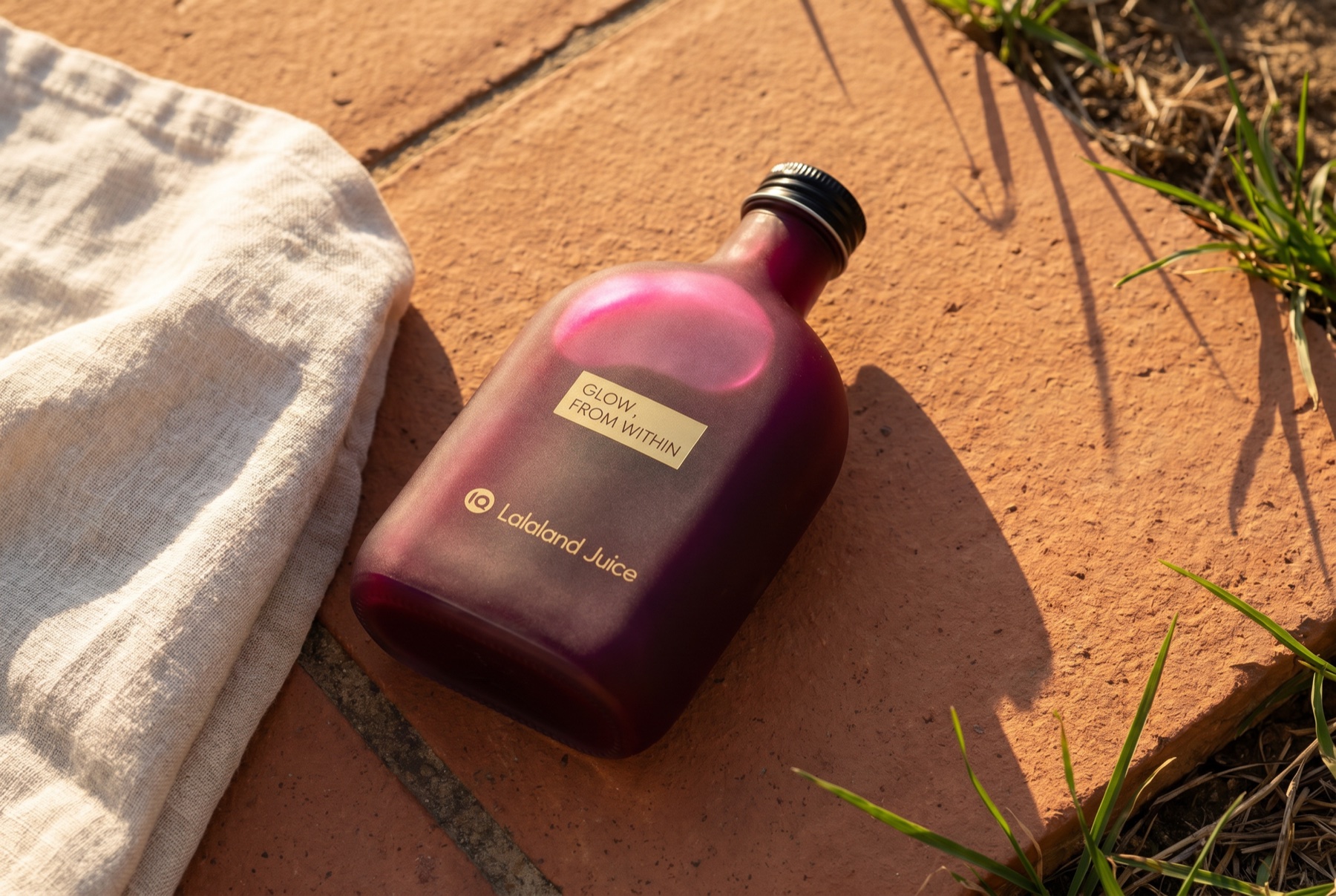
Mine is Sunday morning. The long breakfast. A walk with no route. The phone face-down at home. And one small marker, because a switched-on mind needs to be told the off-hours have begun: I open something cold and drink it slowly — lately a Model Glow, beetroot-pink, beading quietly in the heat — and let that be the line the week cannot cross. The stopping does the work. The bottle marks the hour it begins.
Notice that none of this performs. No timestamp, no story, no proof for anyone. That is the quiet part of the new flex: worn correctly, almost nobody sees it. You simply arrive at Monday looking like you've been somewhere expensive.
You have. You've been off.
This Sunday, wear it once — nowhere to be, nothing to prove, one unhurried hour with your name on it. The city will keep score without you for a morning. It always does.
Jay Qin is a long-term guest columnist for The Slow Sunday Journal, and the founder of the 5:15 Club.